

Skip to Content
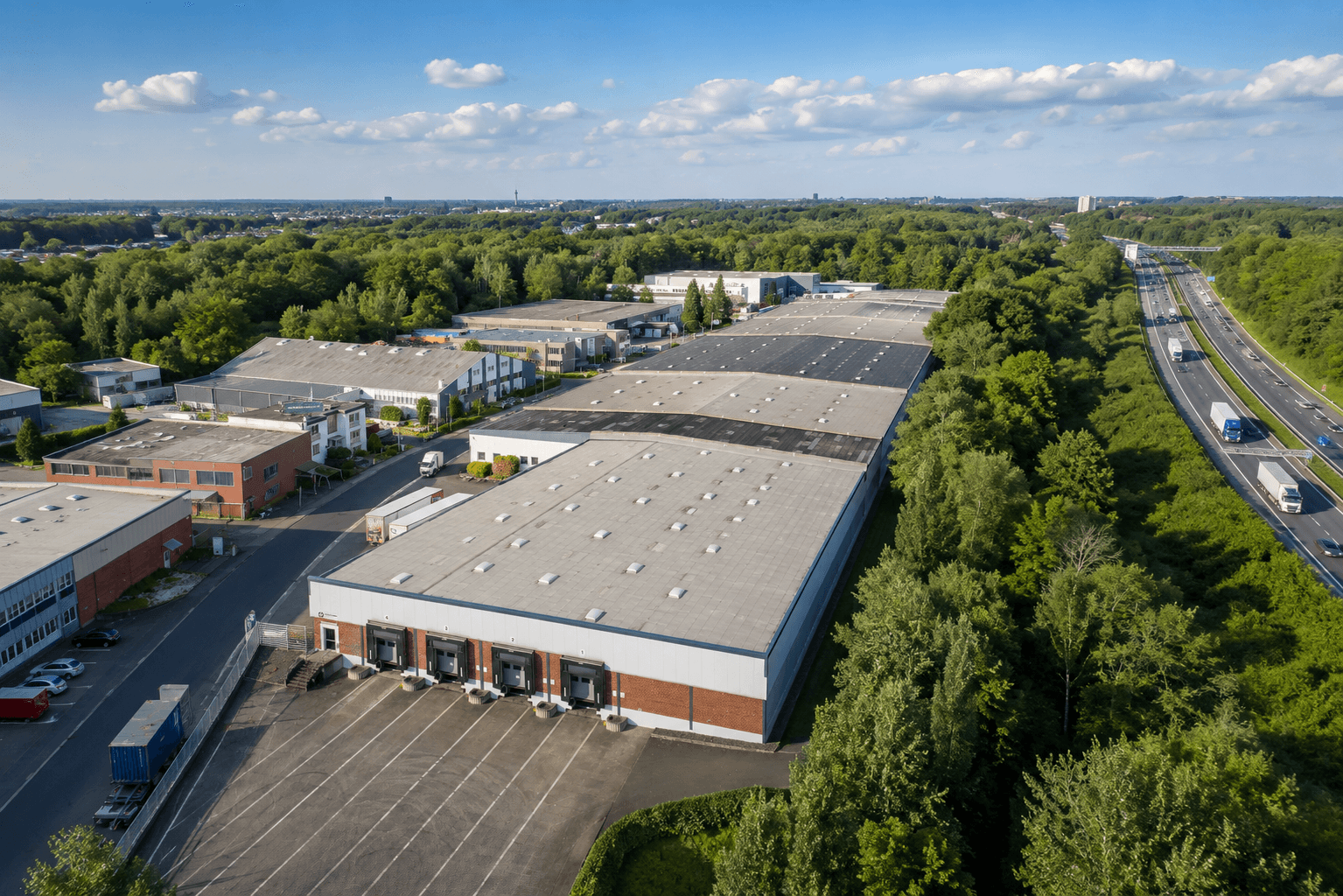
Logistics warehouse with loading doors at BENTO Leverkusen, brokered by Angermann NRW. Symbolic image for CEP depots and last-mile spaces in NRW

Warehouses for CEP and Last Mile in NRW

Parcel depots and delivery hubs of 2,000 to 5,000 m²: close to the city, with plenty of doors and a building permit that allows night operations. Angermann NRW has brokered eight to nine CEP sites in and around Cologne and will tell you what matters for your next space.

Why doors and building law decide for CEP

Courier, express and parcel services do not need high-bay racking. They need throughput: shipments arrive by truck at night, are sorted and loaded onto vans in the morning. The building is a flow, not a store.

That is why different rules apply than in classic logistics. What is needed is 2,000 to 5,000 m² close to the delivery area, up to six doors per 1,000 m² instead of one, and large yards for the delivery fleet. Clear height and floor load are secondary.

The most important feature: a building permit that allows operations between 10 p.m. and 6 a.m. Without night operations, no parcel depot works. Anyone who does not check this before signing risks a prohibition of use.

Our catchment area: Cologne, Bonn and the Rhineland as the core market, plus Düsseldorf, the Ruhr region and the Lower Rhine. All industries at a glance on the page about industrial and logistics warehouses in North Rhine-Westphalia.

  • Delivery hub for parcels

    Last mile in the delivery area: close to the city, many doors, space for the van fleet.

  • Cross-dock for general cargo and express

    Dock doors with levellers, higher floor load, motorway within reach.
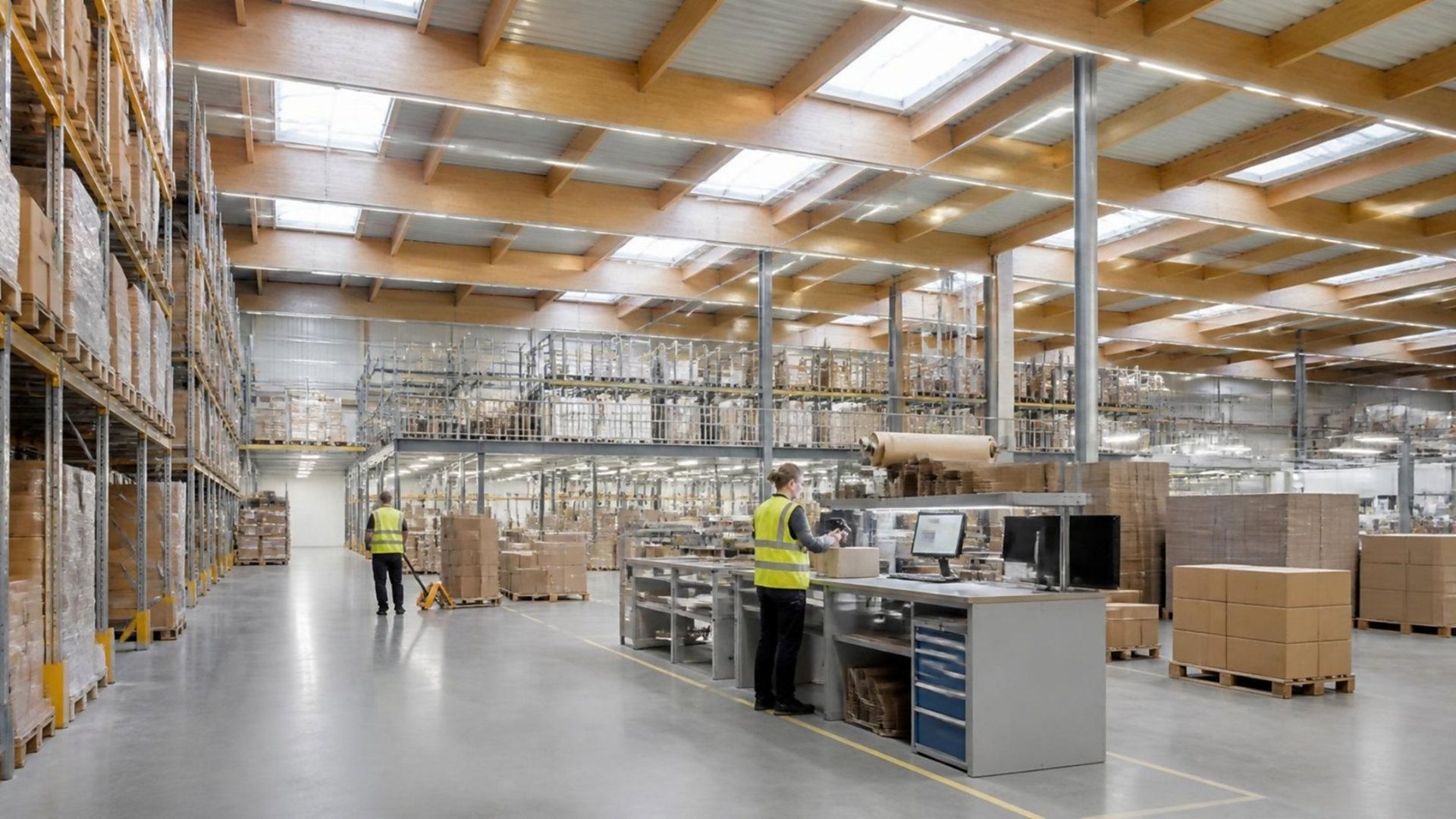
Interior view of a logistics warehouse with loading doors. Handling space for parcel and express services in Cologne and NRW

Three figures that describe this market

Parcel volumes are growing, delivery is getting more expensive, and depots are moving closer to the city. For the search for space this means: little supply, high time pressure.

  • 4.37 billion parcels

    were delivered in Germany in 2025. For 2030 the industry association BPEX expects up to 5.08 billion.

  • 6 doors per 1,000 m²

    is what a parcel depot needs at the upper end. The standard for logistics warehouses is one door per 1,000 m².

  • 41 percent

    of supply chain costs are attributable to the last mile, according to Capgemini. The depot location decides the margin.

What makes a warehouse a parcel depot

Six features decide whether a space works for CEP and last mile. Most of them are not in any brochure.

  • 01 Doors in abundance

    One door per 1,000 m² is the market standard. A parcel depot needs four to six times that: dock doors with levellers for truck deliveries and ground-level doors for the delivery vans. Too few doors can hardly be added later.

  • 02 Floor space instead of height

    What is needed is 2,000 to 5,000 m² with four to eight metres clear height. Five metres is usually enough. More important are few columns for the sorting equipment and a floor load of around three tonnes per square metre.

  • 03 Yard space instead of truck parking

    For CEP the ratio of building to outdoor space tips towards the yard: room for vans, swap bodies and truck handling. Truck parking and outdoor storage, on the other hand, a depot does not need.

  • 04 Close to the city with motorway access

    The delivery hub sits in or next to the delivery area. What counts is the postcode area to be served and the driving time to the motorway for the nightly inbound trucks.

  • 05 Building law for night operations

    Deliveries before 6 a.m. are indispensable. That requires an industrial or commercial zone whose zoning plan allows the noise levels. Residential buildings nearby are a knock-out criterion.

  • 06 Power for the fleet

    Electric delivery vans need charging points and a grid connection that can carry them. Plus car and bicycle parking for staff, depending on public transport access.

Which delivery operation do you want to set up?

Tell us which postcode area you serve, how many vehicles leave the yard in the morning and when the first truck arrives. Mike Dimmel and the Industrial & Logistics team will assess this and tell you which spaces in Cologne, Bonn, Düsseldorf and the Ruhr region fit.

Discuss requirements

Privacy notice

Lease for CEP spaces: must-haves and no-gos

Parcel services and their subcontractors rent short, often for one to three years. That only works with a landlord who knows the model. Three points that belong in the lease, and three that make it expensive.

  • Must-have: a term that matches the contract

    Delivery contracts run one to three years, leases often longer. The term should be tied to the contract. Below three years the market gets tight, which is why it pays to look for owners who accept short leases.

  • Must-have: night operations in the lease

    Use as a transshipment hub with operations between 10 p.m. and 6 a.m. is stated expressly in the lease, backed by the zoning plan and building permit. A verbal assurance from the landlord is no substitute for a check.

  • Must-have: reinstatement only for special fit-out

    Additional doors, dock levellers and charging infrastructure raise the value of the warehouse for any subsequent user. What is reusable stays in place. Reinstatement only for what truly only you need.

  • No-go: signing under time pressure

    Tender won, go-live in three months: whoever takes the first available warehouse now checks neither doors nor building law. That is the constellation that most often ends up with the authorities.

  • No-go: overplaying the rent negotiation

    CEP is a low-margin business, every cent counts. But whoever drags out the negotiation loses the landlord to the next interested party when supply is tight. Speed beats the last cent.

  • No-go: forcing options

    Extension options are unattractive for owners on short terms. Making them a condition narrows the market. Better: a realistic initial term and a good relationship with the landlord.

Seven questions before you sign

Points that can be clarified in advance for CEP spaces, and that otherwise only show up when the first truck is at the door at night.

  1. How many doors do we really need?

    Work backwards from operations: how many trucks arrive at night, how many delivery vans are loaded at the same time in the morning? That gives the number of dock doors with levellers and ground-level doors. As a rule of thumb, four to six times the logistics standard of one door per 1,000 m². Better one door too many than one too few, retrofitting is expensive.

  2. Is a warehouse with five metres clear height enough?

    In most cases, yes. Parcel depots do not store, they sort. What is needed is four to eight metres clear height, few columns for the conveyor technology and around three tonnes floor load per square metre. Older, lower existing buildings that are ruled out for classic logistics are often exactly right for CEP and cheaper to get.

  3. Are we allowed to work at night?

    The decisive question. What counts is the zoning plan and the TA Lärm noise limits for the night period from 10 p.m. to 6 a.m.: 70 dB(A) in industrial zones, 50 in commercial zones, 45 in mixed-use zones and 40 in residential zones. A depot with nightly truck traffic therefore usually needs an industrial or commercial zone with no housing within earshot. We check this before the viewing, not after.

  4. Which regions in North Rhine-Westphalia come into question?

    Cologne and its surroundings are the core market with the highest delivery density. Bonn and the Rhein-Sieg district offer commercial zones close to the city with motorway access. Düsseldorf and the Ruhr region bring the largest supply of existing warehouses. Which area fits is decided by the delivery area, not by the rent.

  5. How short can the lease be?

    One to three years is common in the industry because the delivery contracts themselves run that long. Below three years the supply shrinks noticeably, many owners want longer security. But they exist, the landlords who can handle short terms. Knowing them is half the battle in CEP.

  6. What about power and charging infrastructure?

    The industry is electrifying its delivery fleets. Before signing, ask about the available grid capacity and whether charging points may be installed in the yard. A grid connection that is too weak is expensive and slow to fix afterwards.

  7. What happens if the use is not permitted?

    Then a prohibition of use looms. The way back leads through a change-of-use procedure, which can take months, or to a new site. We have accompanied both. Better to settle the question before signing: we check the zoning plan and building permit of every space we propose to you.

Three constellations where it gets expensive

From almost twenty years of brokering warehouses in North Rhine-Westphalia. We have seen all three with parcel services, and all three can be avoided.

  1. Taking the first available warehouse under time pressure

    The tender is won, the start is a few weeks away. Now every space that somehow fits counts. That is exactly when doors, yard and building law go unchecked. The time pressure is real, the shortcut is still the most expensive route.

  2. Negotiating the rent to the last cent

    CEP lives on small margins, so every cent is fought over. With tight supply in Cologne and Düsseldorf, however, the owner has the next interested party on the list. Whoever negotiates too long loses the space, not the cent.

  3. Not checking building law

    What the previous tenant was allowed to do is not automatically what a parcel depot needs. If the permit for night operations is missing, the authority can prohibit the use. Then operations stop while the lease keeps running.

Three cases from practice

Eight to nine CEP sites in and around Cologne, one change-of-use procedure and one rescue after a prohibition of use. Anonymised, but real.
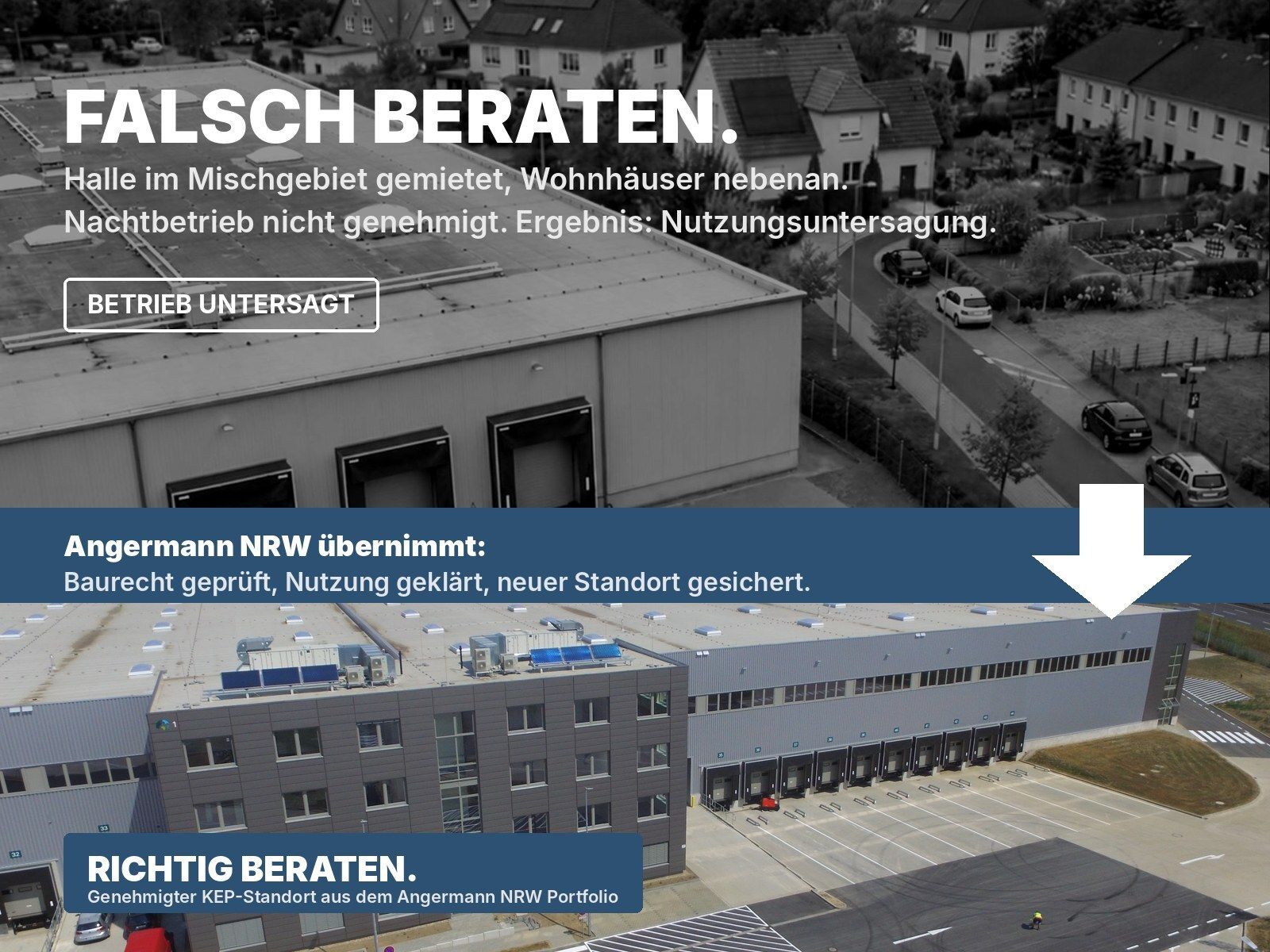
Before and after: warehouse in a mixed-use zone with prohibited use, and an approved CEP site from the Angermann NRW portfolio
Badly advised, then rescued

A delivery service had rented a warehouse that was never approved for night operations. The authority prohibited the use, operations stood still. Angermann NRW found a replacement site with the right building law within a short time and accompanied the move. Deliveries have run without interruption ever since.
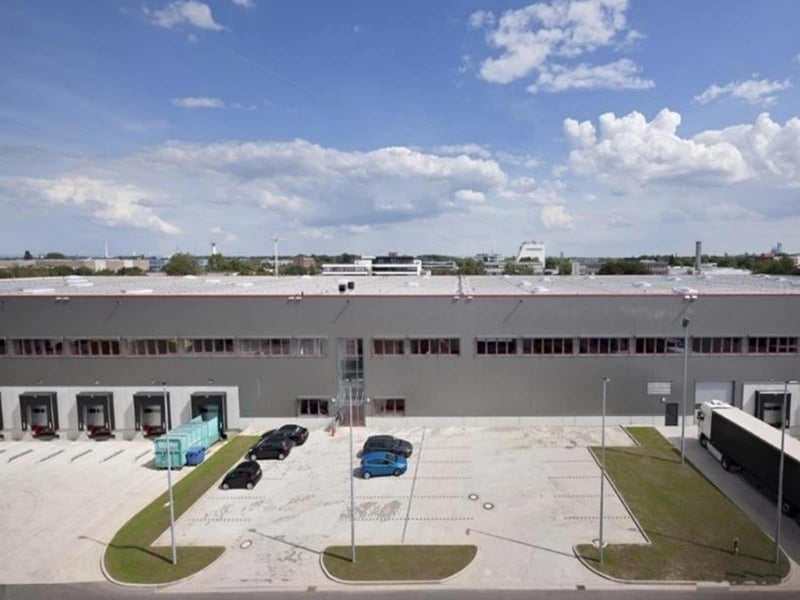
Logistics warehouse in Kerpen from the Angermann NRW portfolio
Change of use accompanied

An existing warehouse in the Cologne area was a perfect fit in location, doors and yard, only the permit did not cover transshipment operations. We accompanied the change-of-use procedure with the owner and the authority until the depot could start operating with legal certainty.
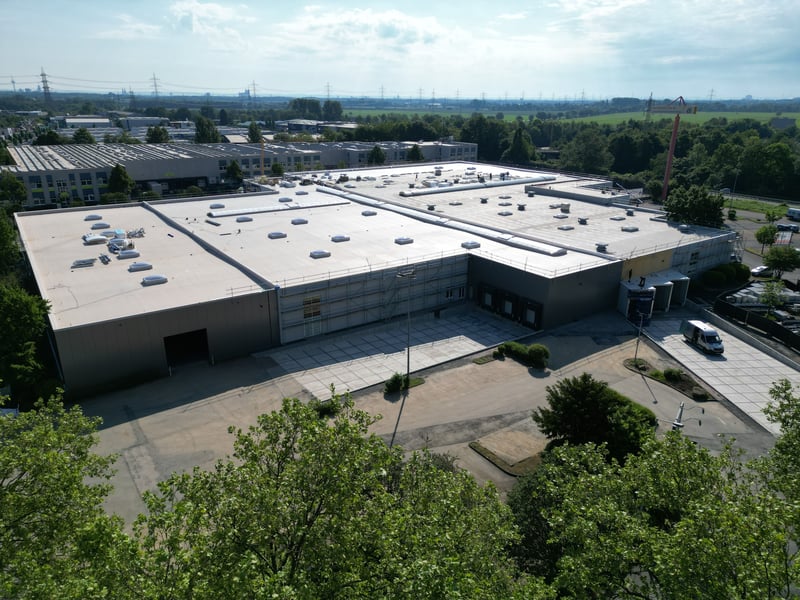
Aerial view of a logistics park in Frechen near Cologne from the Angermann NRW portfolio
Eight to nine depots in and around Cologne

For parcel and express services and their subcontractors we have brokered eight to nine delivery hubs in Cologne and its surroundings: between 2,000 and 5,000 m², close to the city, with short terms and a building permit that supports deliveries before 6 a.m.
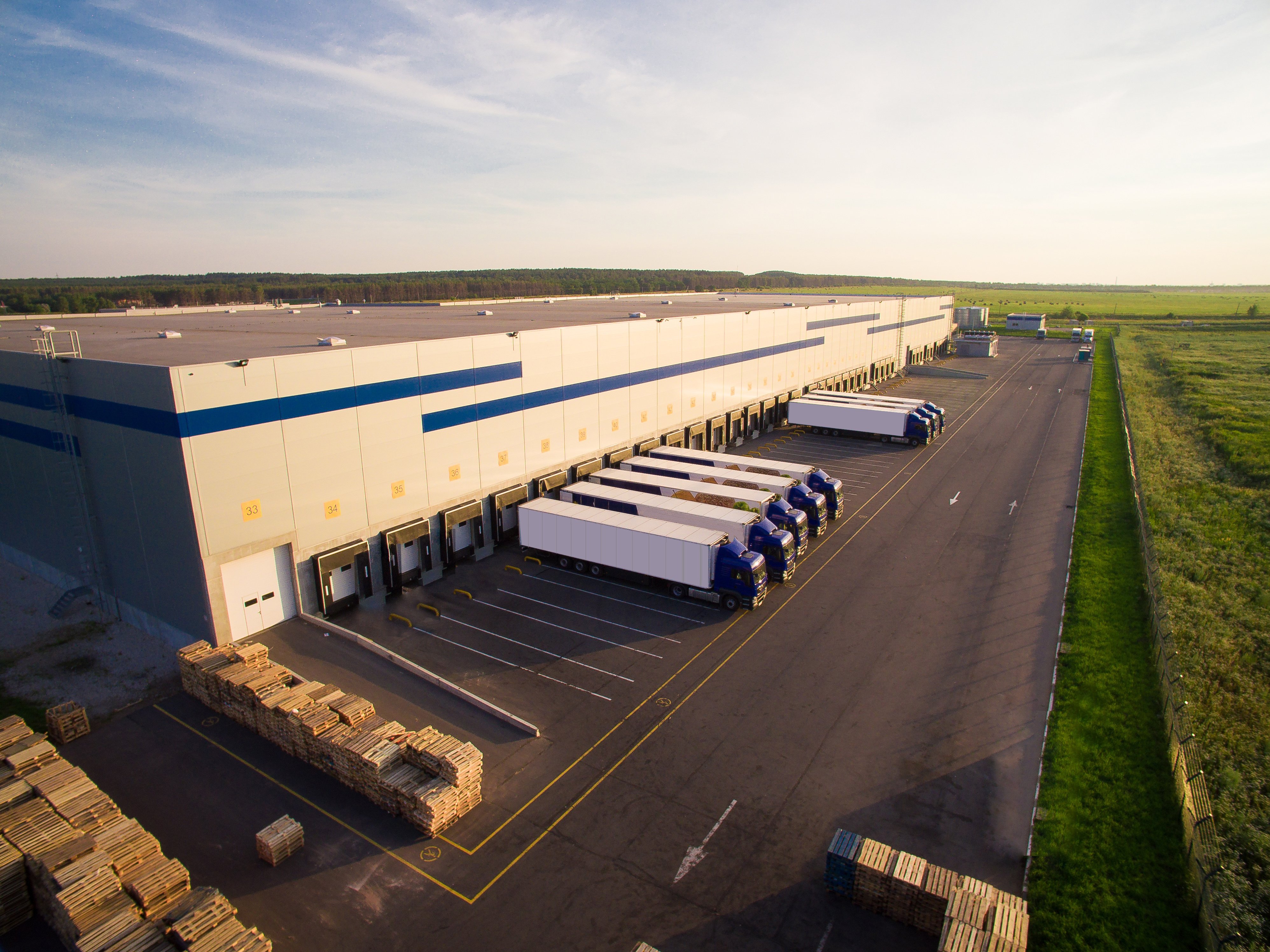
Logistics warehouse in North Rhine-Westphalia as background image

Why we know CEP spaces before they reach the market

With parcel services, the time window decides. Access to spaces before the market and checking building law up front are the difference between operating and dealing with the authorities.

We know the building-law situation of the sites

For every space we propose, we check the zoning plan and permit for night operations. We have accompanied a change-of-use procedure and moved a delivery service to a new site after a prohibition of use.

Eight to nine depots brokered in Cologne

For parcel, express and general cargo services and their subcontractors we have brokered eight to nine sites in and around Cologne. We know which owners accept short terms and which yards can take the fleet.

Six specialists who do nothing but warehouses

Six colleagues in North Rhine-Westphalia work exclusively on logistics and industrial property, in-house for almost twenty years. Through the Angermann Real Estate Group, specialists in Hamburg, Berlin, Hanover and Frankfurt join in.

Member of DEBV, the German Brownfield Association

Member of the DEBV

Brownfield Expertise for North Rhine-Westphalia

We bring industrial brownfields and existing sites back into use: with in-depth research, clear positioning, and the right users and investors. As a member of the German Brownfield Association, we are part of the nationwide network for site revitalization.

Case Study Kerpen-Sindorf: Brownfield Site Brokered to Aconlog →
Member of the LOG-IT Club, Logistik.NRW competence network

Member of the LOG-IT Club

Part of the NRW Logistics Network

The LOG-IT Club e. V. is the association behind the Logistik.NRW competence network, with several hundred members from logistics, industry, trade and academia. As a member we are close to the companies looking for space in North Rhine-Westphalia and to the topics that move them.

Angermann NRW in the LOG-IT Club member directory →

Tender won, depot still missing?

Then every week counts. Patrick Sohns knows the existing warehouses, the expiring leases and the owners between Cologne, Düsseldorf and the Ruhr region who can handle short terms. He will tell you openly what can be achieved in your time window and which spaces you can save yourself.

Patrick Sohns, Logistics & Industrial, Management Board at ANGERMANN NRW – commercial real estate Cologne

Patrick Sohns

Logistics & Industrial, Management Board

Book a no-obligation first meeting

Privacy notice