
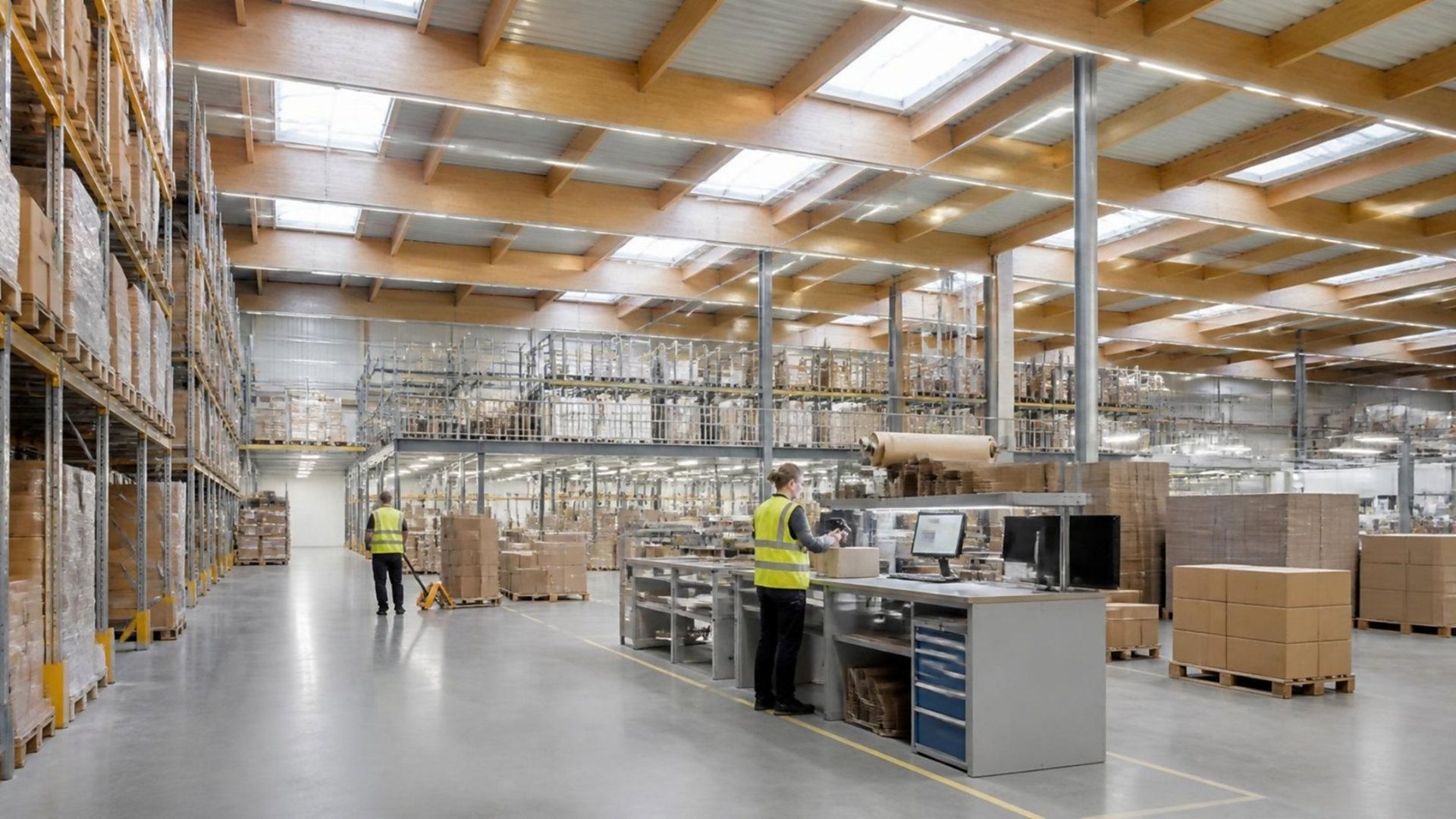

Warehouses for E-Commerce and Fulfillment in North Rhine-Westphalia
Online retailers with their own logistics operations and fulfillment service providers are looking for almost the same type of property: minimal office space, high ceilings, and efficient delivery access. Here’s how to identify a suitable warehouse—and why the search often falls short in practice.
The Warehouse Requirements Profile for Online Retailers and Fulfillment Service Providers
Online retailers with their own logistics operations and fulfillment service providers are essentially looking for the same type of warehouse: minimal office space, high ceilings, and a loading dock designed with logistics in mind. Office space accounts for five to seven percent of the total area—everything else takes place within the warehouse.
Rule of thumb for space requirements: For every billion euros in online retail revenue, approximately 50,000 m² of logistics space is needed. This is a guideline for estimating future needs—not a precise calculation.
In this segment, Angermann NRW primarily handles spaces up to 20,000 m², both regionally and nationwide. The page on industrial and logistics warehouses in North Rhine-Westphalia provides an overview of all sectors.
-
Online retailers with their own logistics operations
Our own warehouse, our own staff—from a one-person operation to a corporate group.
-
Fulfillment Service Provider
We handle logistics for third parties, often for overseas retailers.
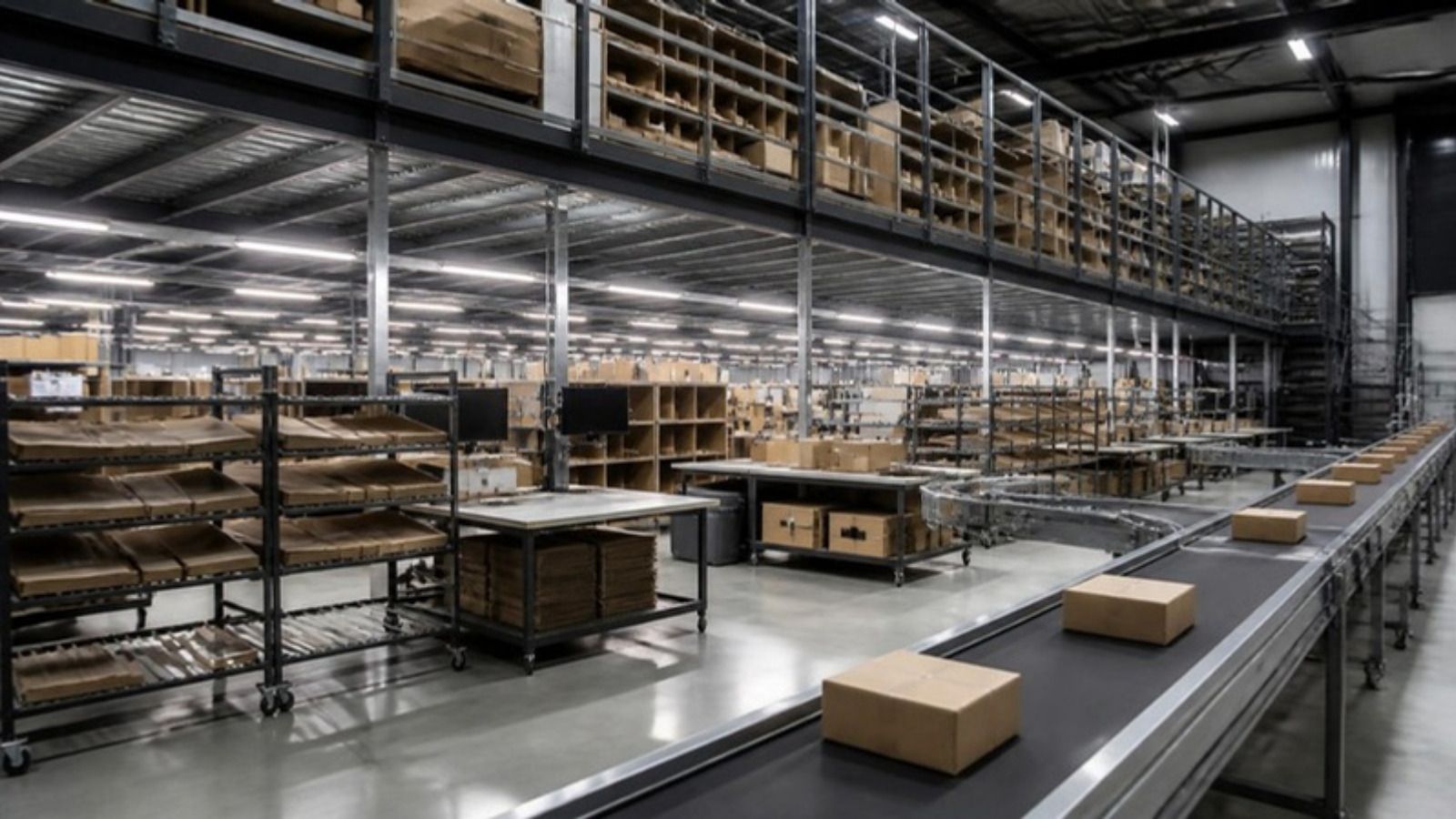
The standard by which buildings are constructed today
Three key metrics by which a modern logistics facility for e-commerce and fulfillment must be measured.
-
12
meter
Ceiling height according to current standards, typically 12.00 to 12.20 m—the space is elevated.
-
7.5
metric tons per square meter
Floor load capacity in new construction. A few years ago, about 5 metric tons was standard.
-
12 × 24
Meter Support Grid
Best value for the money—and the grid that planners and shelving installers find easiest to work with.
We understand the requirements of your industry
Six factors determine whether a warehouse is even a viable option for e-commerce and fulfillment.
-
01 Gates and Delivery
At least one ramp door per 1,000 m² of logistics space, plus one ground-level, truck-accessible door per unit. Outside, everything must be sized so that a 40-metric-ton truck can enter and exit easily—preferably via two separate access roads.
-
02 Floors and Structural Engineering
7.5 metric tons per square meter is standard in new construction; a few years ago, it was around 5. The 12 × 24-meter column grid offers the best value for the money—and is the grid that designers and shelving manufacturers find easiest to work with.
-
03 Technology and Lighting
New buildings are heated using air-to-air heat pumps; gas radiant heaters have been phased out. Daylight enters through side skylights or roof skylights. Columns are made of concrete, and trusses are increasingly made of glued laminated timber—for aesthetic reasons and fire safety, and because the cost is now comparable.
-
04 Mezzanine above the ramp gates
There, a second logistical level is created with a load capacity of about 500 kg per square meter, stocked by forklifts. It makes use of the vertical space that would otherwise remain empty in the delivery area. Most users can work with this system, but some cannot.
-
05 Outdoor Facilities and Parking Spaces
The farther a location is from public transportation, the more car parking spaces are needed; municipalities such as Cologne now regularly request information on bicycle parking spaces. Dedicated truck parking spaces are rarely available and are increasingly being required to prevent trucks from parking in public areas.
-
06 Approval and Certification
DGNB Gold certification is the industry standard for new construction—not only as proof of sustainability, but also because properties without it are difficult to market for rent or sale. Green roofs, green facades, and solar panels are increasingly mandated by zoning plans. An existing permit for nighttime operations is rare and therefore highly valuable.
What are your requirements?
Just tell us briefly what you store, pick, and handle—and on what scale. Patrick Sohns and the Industry & Logistics team will assess your needs and let you know which warehouses are a good fit and which ones you can do without.

Patrick Sohns
Geschäftsleitung, Logistik & Industrie
Where Demand Is High in North Rhine-Westphalia
Demand is not evenly distributed across the state. Here are three trends we’ve been observing for years—and they make all the difference when choosing a location.
-
The Rhine Corridor and Overseas Demand
Along the Rhine and its ports—Duisburg, Düsseldorf, Cologne, and all the way to the Netherlands—we have observed a significant clustering of Asian demand for years. This includes the routes from Rotterdam via Venlo to Duisburg and from Antwerp via Maastricht and Aachen to the Cologne/Bonn region. This is exactly where overseas retailers are looking for fulfillment services.
-
The logistics hubs at the highway interchanges
Cologne, Düsseldorf, and the Ruhr region: These traditional logistics hubs are centered around highway interchanges and metropolitan areas. That’s where supply is tightest—and competition for available space is fiercest.
-
What the situation must accomplish beyond that
Excellent transportation access is a must; good public transportation access for shift changes is desirable—as is the ability to work at night with as few restrictions as possible. Working around the clock, seven days a week, is the exception; where such permission is granted, it is correspondingly valuable.
What Should Be Clarified Before the Site Visit
Six issues that regularly hold up e-commerce and fulfillment projects in North Rhine-Westphalia—and that can be clarified in advance rather than during the on-site visit.
-
How much outdoor space do we need in addition to the gym?
Everything must be designed so that a 40-metric-ton truck can drive in and out safely—preferably via two separate access roads so that traffic doesn’t interfere with each other. In addition, there must be parking spaces for passenger cars, and the fewer public transit options available at the location, the more of these spaces are needed. Dedicated truck parking spaces are welcome but rarely available—and are increasingly required as a condition of the use permit because trucks parked on public streets disturb the neighborhood.
-
Can we work around the clock?
Inside the warehouse itself, 24/7 operations are not an issue in most facilities. The bottleneck is deliveries: the arrival and departure of large trucks is what bothers the neighborhood—and is therefore restricted. An existing permit for continuous delivery operations is rare and, accordingly, valuable.
-
What permits and certificates are required?
In new construction, DGNB Gold certification is the standard. It is pursued not only for the sake of tenants, but also to ensure that the property remains an attractive investment and thus marketable—both for rental and for sale. In addition, there are requirements from newer zoning plans: green roofs, green facades, and solar panels.
-
What do the lease agreements look like?
No one rents space for e-commerce and fulfillment on a one-year lease. A five-year fixed-term lease is standard. Renovations to the warehouse itself are rare—it’s more a matter of the tenant’s own fit-out, particularly the shelving system. The tenant always provides this themselves; for tax reasons, the landlord cannot supply it.
-
Do seasonal peaks matter?
That depends on who you work for. Companies that handle fulfillment for seasonal businesses—the classic example being candy during the Christmas season—experience significantly higher volume for months on end. Companies that ship their own product lines are already familiar with their sales patterns. Both factors should be factored into the floor plan, not left for renegotiation.
-
Can we charge electric trucks on the premises?
Electric trucks have not yet become widespread; to our knowledge, no special permits for quieter nighttime deliveries have been issued so far. The fact that a basic infrastructure of charging stations is in place could help support the case in the future. The real bottleneck, however, is the power capacity of electrical connections: on many properties, it is simply not sufficient for the desired charging infrastructure.
The Three Mistakes That Can Cost You Dearly When Looking for a Space
Based on nearly twenty years of experience brokering venue rentals in North Rhine-Westphalia—and all three only become apparent once the lease is already in effect.
-
Misjudging one's own space requirements
That’s the most common mistake—and the most expensive one. You’re signing a fixed-term lease for at least five years, so you need to know how much space you’ll need over that period, not just today. Too much space costs money every month; too little space costs you the location. It’s precisely this assessment that’s the hardest to make on your own.
-
Underestimating how long the road to moving in is
From the outside, it looks like there’s a wide range of options—but that’s only true if you have the region’s approval. On top of that, you need a use permit, land availability, and restrictions on use, such as round-the-clock delivery operations. People almost always underestimate why a change of use is necessary in the first place and how long the planning, approval, and implementation will take afterward.
-
Take advantage of the low rent in this outlying location
Your choice of location also affects your ability to recruit staff. Companies that move to the outskirts to take advantage of lower rent often find themselves competing with large corporations and industrial firms for the same skilled workers—and, as a smaller company, they end up at a disadvantage. The savings on rent are then quickly eaten up.
Real-World Examples
Three properties in North Rhine-Westphalia that we’ve brokered in this sector—and which demonstrate just how varied the profiles behind the same keyword can be.
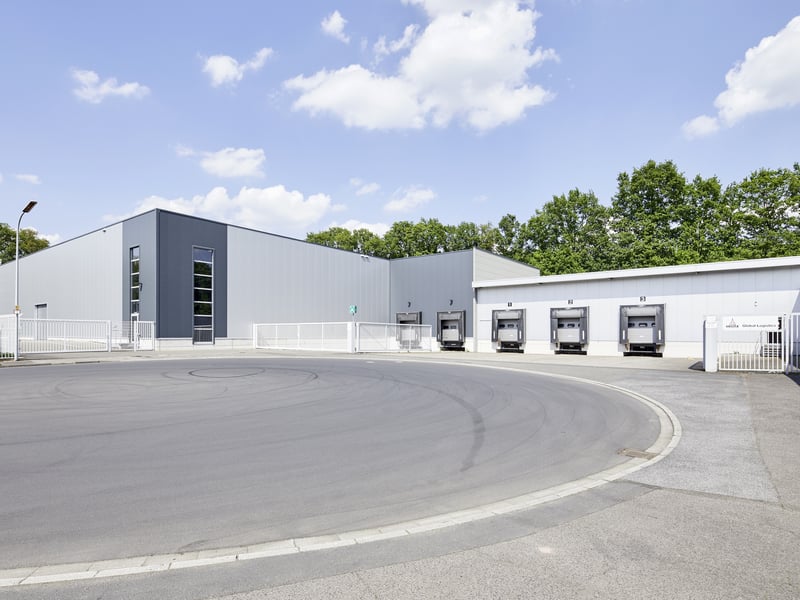
8,500 m² of logistics space at Siemensstraße 2–18, brokered as a lead listing. A manufacturer that sells its own products online and handles the logistics in-house—e-commerce, not third-party fulfillment.
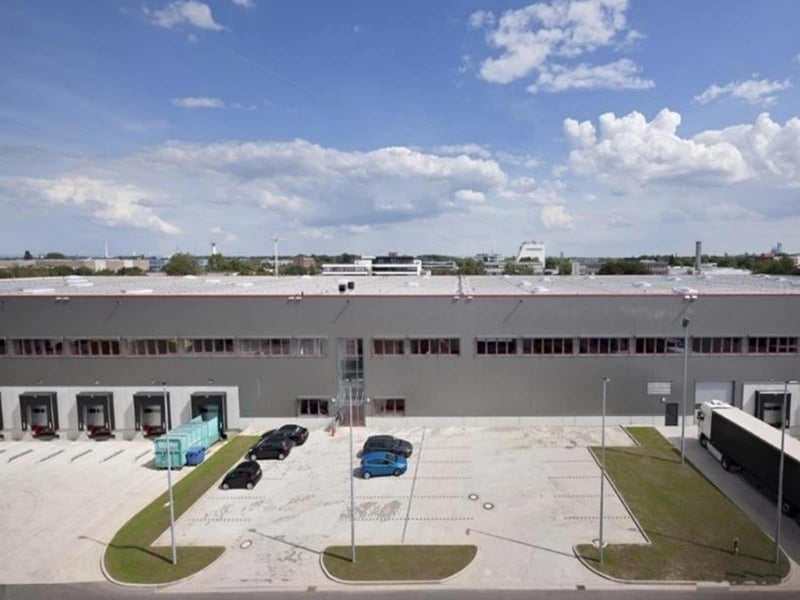
10,000 m² of logistics space at Wankelstraße 17–19. Contract logistics and third-party fulfillment: What matters here is that the space, doors, and technology can accommodate changes in clients and peak demand.
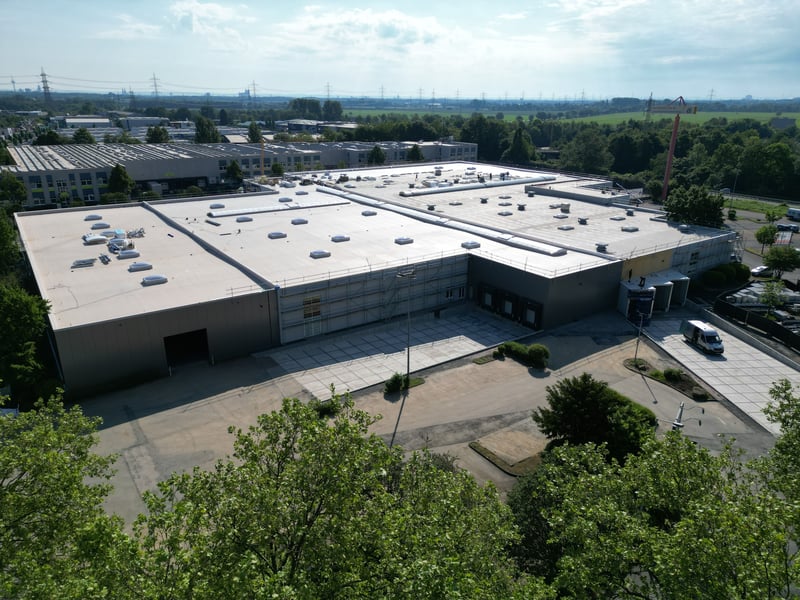
13,700 m² of warehouse space on Ernst-Heinrich-Geist-Straße, shared among several tenants—including fulfillment providers. A location that demonstrates how different user profiles can coexist within a logistics park.
Why the search for the right warehouse isn't just a side project
For us, warehouse brokerage isn’t just an add-on to office leasing—it’s a separate department with its own history.
Angermann NRW has been managing logistics and industrial real estate in-house with its own staff for nearly twenty years. Six colleagues in North Rhine-Westphalia focus exclusively on this area. That’s what sets us apart from companies that manage warehouses as a side business.
The group has offices in Hamburg, Berlin, Hanover, and Frankfurt, among other locations—each staffed with specialists in logistics and industry, in both leasing and investment. Even if your search extends beyond North Rhine-Westphalia, everything remains under one roof.
We have strong ties with local economic development agencies. Many of them have what are known as “agency liaisons,” who coordinate communication among the relevant government agencies. This is particularly helpful in situations where changes in land use and permitting processes would otherwise be time-consuming.
Member of the DEBV
Brownfield Expertise for North Rhine-Westphalia
We bring industrial brownfields and existing sites back into use: with in-depth research, clear positioning, and the right users and investors. As a member of the German Brownfield Association, we are part of the nationwide network for site revitalization.
Case Study: Kerpen-Sindorf—Brownfield Site Brokered to Aconlog →Haven't found anything suitable on the market yet?
Then it’s definitely worth talking to us. Mike Dimmel keeps a close eye on project developments in North Rhine-Westphalia and will be honest with you if, realistically, your profile won’t find anything in the coming months—and what could be done to change that.

Mike Dimmel
Logistik & Industrie