

Skip to Content
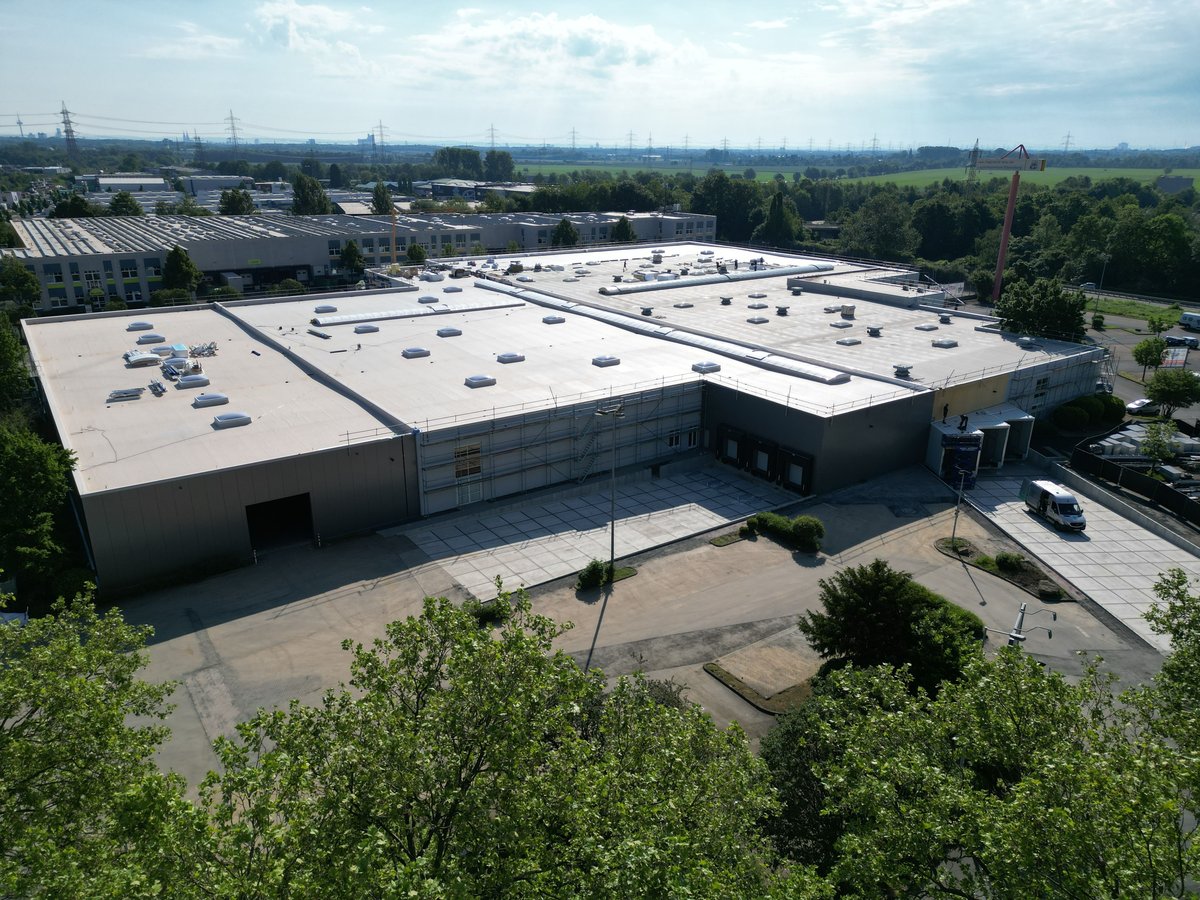
Aerial view of a logistics park in North Rhine-Westphalia
image-description

Rent Industrial and Logistics Warehouses in North Rhine-Westphalia

A warehouse is not a one-size-fits-all product. The specific requirements depend on the industry: clear height and floor load capacity, doors and maneuvering space, permits, and operating hours. This page leads to the requirement profiles for individual industries and shows how the market is structured in North Rhine-Westphalia. Are you looking specifically in Cologne and the surrounding area? Then continue here: Rent a warehouse in Cologne.

What Triggers a Warehouse Search

In practice, there are three reasons. Which one applies determines the pace, search radius, and room for negotiation.

  1. Growth

    The most common reason. The space is no longer sufficient, and the question isn't how much is missing today, but how much will be needed over the term of the new lease. If you don't think long-term here, you'll be looking for a new space again in three years.

  2. Consolidation

    For many years, the story was almost exclusively one of growth. Now, consolidation is also coming into play: locations are being merged, spaces are being downsized, and processes are being consolidated. This, too, is a search for space—just with a different twist.

  3. New Technology, Old Hall

    A facility isn't just outgrown in terms of floor space. A new intralogistics system, an automated warehouse, changes in delivery procedures—if the building or the external infrastructure can no longer accommodate these changes, no renovation will help.

A Dedicated Division, Not a Side Project

At Angermann NRW, the Industry and Logistics division isn’t just a side business—it has its own team and its own history.

  • 6 Specialists

    In North Rhine-Westphalia, they focus exclusively on logistics and industrial properties—both for leasing and investment.

  • 20 Years in-house

    For nearly twenty years, we have been managing this asset class with our own staff, rather than treating it as a side business.

  • 12 Industries

    A separate requirements profile is created for each one—because a picking warehouse is different from a hazardous materials storage facility.

Twelve Industries, Twelve Requirement Profiles

Anyone who stores refrigerated goods isn’t looking for just any logistics warehouse—they’re looking for a warehouse specifically designed for refrigerated goods. That’s why we’re creating a dedicated page for each industry, featuring the specifications that really matter in that sector.

  • E-commerce and Fulfillment

    Online retailers with their own logistics operations and fulfillment service providers are looking for almost the same type of warehouse: minimal office space, high ceilings, and a loading dock designed with logistics in mind.

    Go to the Industry Page
  • Contract Logistics and 3PL

    Third-party logistics, typically through multi-year contracts. Anyone who stores and handles goods for third-party clients needs space that can adapt to changes in clientele.

    Go to the Industry Page
  • Express, Parcel, and Last Mile

    Courier, express, parcel, and the last mile. Here, height matters less than access: gates, maneuvering space, and proximity to the delivery area.

  • Wholesale and Retail

    Central and regional warehouses for retail chains. The operations fall somewhere between traditional logistics and high-volume operations during specific times of the year.

  • Food and Beverages

    Temperature control, hygiene, and the clear separation of product flows determine which items are even considered here.

  • Pharmaceuticals and Medical Technology

    Strict requirements regarding documentation, temperature, and access—and as a result, the pool of suitable properties is quite small.

  • Automotive and Suppliers

    High-frequency supplier logistics. North Rhine-Westphalia has a historically strong network in this area, which influences the choice of location.

  • Machinery and Plant Engineering

    Heavy-duty applications, crane systems, and heights beyond standard logistics specifications. Often more of a production issue than a warehousing one.

  • Chemicals and Hazardous Substances

    Spill containment pans, exhaust ventilation, fire safety, water regulations: In these cases, it’s the permitting requirements that matter, not the floor plan.

  • Building Materials, Trades, Business

    Warehouses with outdoor areas, open-air storage space, and good accessibility—often in the smaller-space segment and with their own market dynamics.

  • Recycling and Waste Disposal

    Transshipment, sorting, and storage under our own regulatory framework. Suitable locations are scarce and rarely available on the market.

  • Critical Infrastructure and Security

    Properties with heightened requirements for access control, redundancy, and operational reliability—a distinct, very niche market.

What kind of warehouse do you need?

Tell us what you produce, store, or handle—and on what scale. Patrick Sohns and the Industry & Logistics team will assess your needs and let you know what options are available on the market in North Rhine-Westphalia.

Discuss requirements

Privacy Notice

image-description

How the Market in North Rhine-Westphalia Is Clustered

Industries are not distributed randomly across the state. Here are four patterns we’ve been observing for years—and which explain why some searches go quickly in one region but not at all in another.

The Rhine and Overseas Demand

Along the Rhine and its ports—Duisburg, Düsseldorf, Cologne, and all the way to the Netherlands—we have observed a growing concentration of Asian demand for years. This demand follows the Rotterdam–Venlo–Duisburg and Antwerp–Maastricht–Aachen–Cologne corridors, encompassing water, rail, and road transport simultaneously.

The logistics hubs at the highway interchanges

Cologne, Düsseldorf, and the Ruhr region: These traditional logistics hubs are located at transportation hubs and within metropolitan areas. That’s where supply is tightest—and competition for usable space is fiercest.

The Automotive Network Between Cologne and Wuppertal

North Rhine-Westphalia continues to have a very strong network of automotive suppliers—in Cologne, Düsseldorf, and the Wuppertal area. Anyone moving there will find well-established supply chains, but will also be competing for the same skilled workers.

East Westphalia: Owner-Operated Small and Medium-Sized Businesses

The East Westphalia region is home to a market dominated by small and medium-sized businesses, which primarily use the properties themselves and prefer to own rather than rent. This has a noticeable impact on the type of rental space that actually comes onto the market there.

What Is Most Often Underestimated Across All Industries

Five factors that come up in almost every warehouse search, regardless of what happens inside the building.

  1. Size—and when you need a change of use

    People who don’t deal with logistics real estate on a daily basis rarely have a sense of the actual scale of the warehouse and lot that’s needed. Equally often underestimated: why a change in the use permit is necessary in the first place, the planning effort involved, and how long it actually takes—from planning through implementation to moving in. This assessment should come at the very beginning of the search, not in the final phase.

  2. Deliveries—not warehouse operations

    Inside the warehouse itself, round-the-clock operations are not an issue at many facilities. The bottleneck is the entry and exit of large trucks: this bothers the neighbors, which is why it is restricted. A location with an existing permit for round-the-clock deliveries is rare and therefore highly valuable.

  3. Reusability—the measure of all things

    A modern logistics property is designed to be suitable for as many types of tenants as possible. This is not a minor detail, but one of its most important features—it determines its marketability in both leasing and sales. For tenants, this means: The more specific your requirements, the smaller the pool of properties built to meet them.

  4. Outdoor Space – and the New Industrial Outdoor Storage Category

    Paved outdoor storage and open spaces now have their own asset classification: Industrial Outdoor Storage. It is rarely found in traditional logistics because project developers build on every square meter of developable land and leave only the open spaces that are truly needed. Anyone who needs such spaces should include them as a separate search criterion from the very beginning.

  5. Certification – Why DGNB Gold Has Become the Standard

    In new construction, DGNB Gold certification is now standard. It is pursued not only for the sake of tenants, but also to ensure that the property remains an attractive investment and thus marketable. In addition, there are requirements from newer zoning plans—green roofs, green facades, solar panels—that do not come from the sales brochure but from planning regulations.

Mitglied im DEBV, Deutscher Brownfield Verband

Member of the DEBV

Brownfield Expertise for North Rhine-Westphalia

We bring industrial brownfields and existing sites back into use: with in-depth research, clear positioning, and the right users and investors. As a member of the German Brownfield Association, we are part of the nationwide network for site revitalization.

Case Study: Kerpen-Sindorf—Brownfield Site Brokered to Aconlog →

Even beyond North Rhine-Westphalia

The Angermann Real Estate Group has offices in Hamburg, Berlin, Hanover, and Frankfurt, among other locations, each staffed with its own specialists in logistics and industrial real estate. Even if your search extends beyond a single region, it remains under one roof. Mike Dimmel coordinates these efforts from Cologne.

Schedule a no-obligation initial consultation

Privacy Notice

image-description