
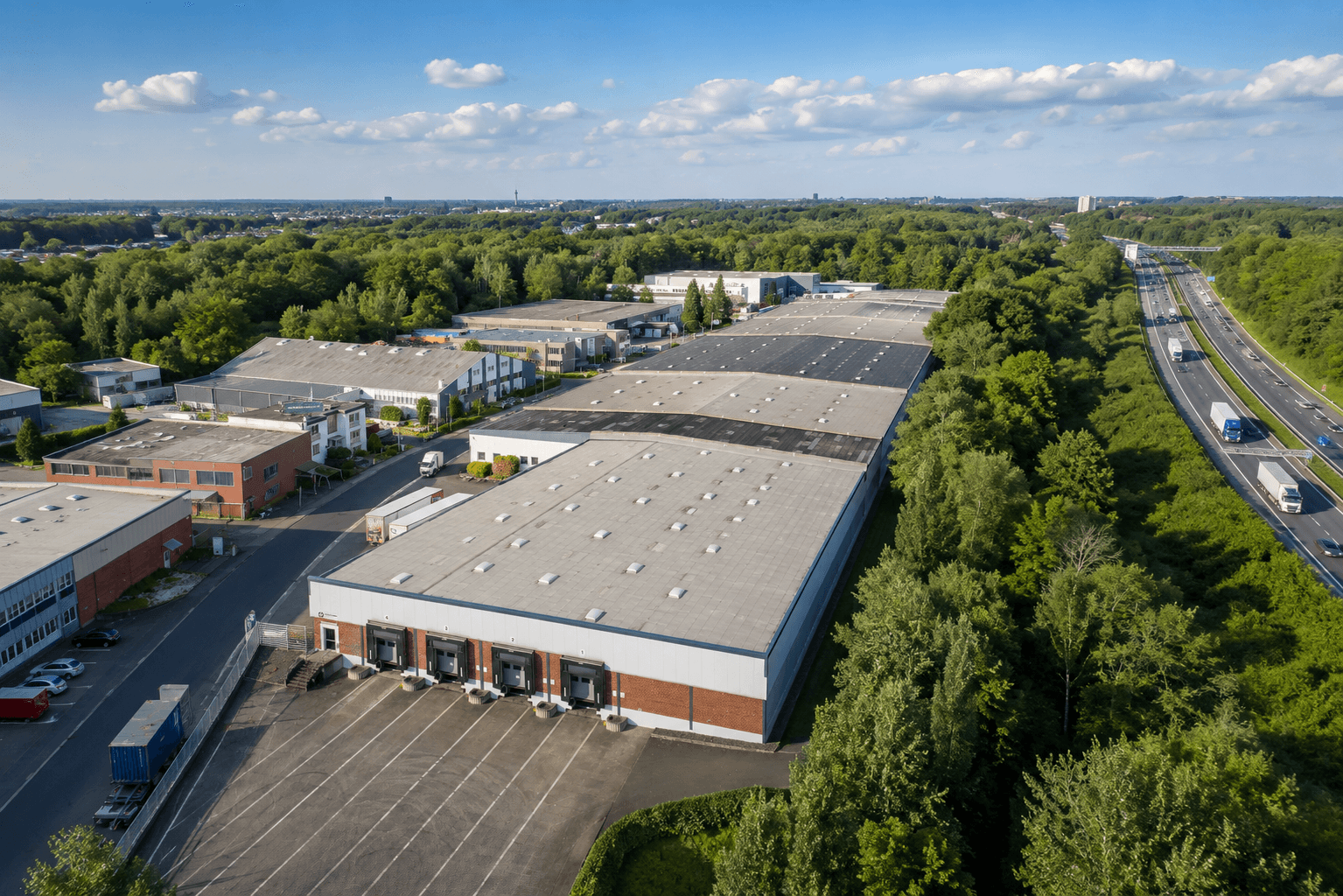

Warehouses for Contract Logistics and 3PL in North Rhine-Westphalia
Contract logistics providers rarely rent facilities for their own use, but rather for a specific customer order with a defined term. We’ll find the right facility for you in Cologne, the Rhineland, and the Ruhr region—and let you know what to look for in the lease agreement.
Why, in Contract Logistics, the Contract Determines the Warehouse
Contract logistics begins when multiple logistics services are bundled and provided on a customized basis for a single client. We refer to it as logistics for spaces of approximately 5,000 m² or larger—anything smaller is considered warehousing.
The difference from other users: Space is almost always leased for a specific client contract with its own term. Contracts typically run for three to five years; logistics lease agreements for new construction run for five to ten years. This gap is at the heart of every 3PL lease.
This gives rise to the most important characteristic: the ability to be used by a third party. A facility that adapts to a change in the client secures the remaining term of the lease.
Our service area: Cologne and the Rhineland as our core market, plus the Ruhr region, the Lower Rhine, the Bergisches Land, and the corridor toward Aachen. An overview of all industries can be found on the page about industrial and logistics warehouses in North Rhine-Westphalia.
-
Renting for Future Use
A warehouse suitable for third-party use that handles a variety of orders.
-
Lease for a Contract
Leased specifically for a contract that was awarded—or even built, in the case of long-term contracts.
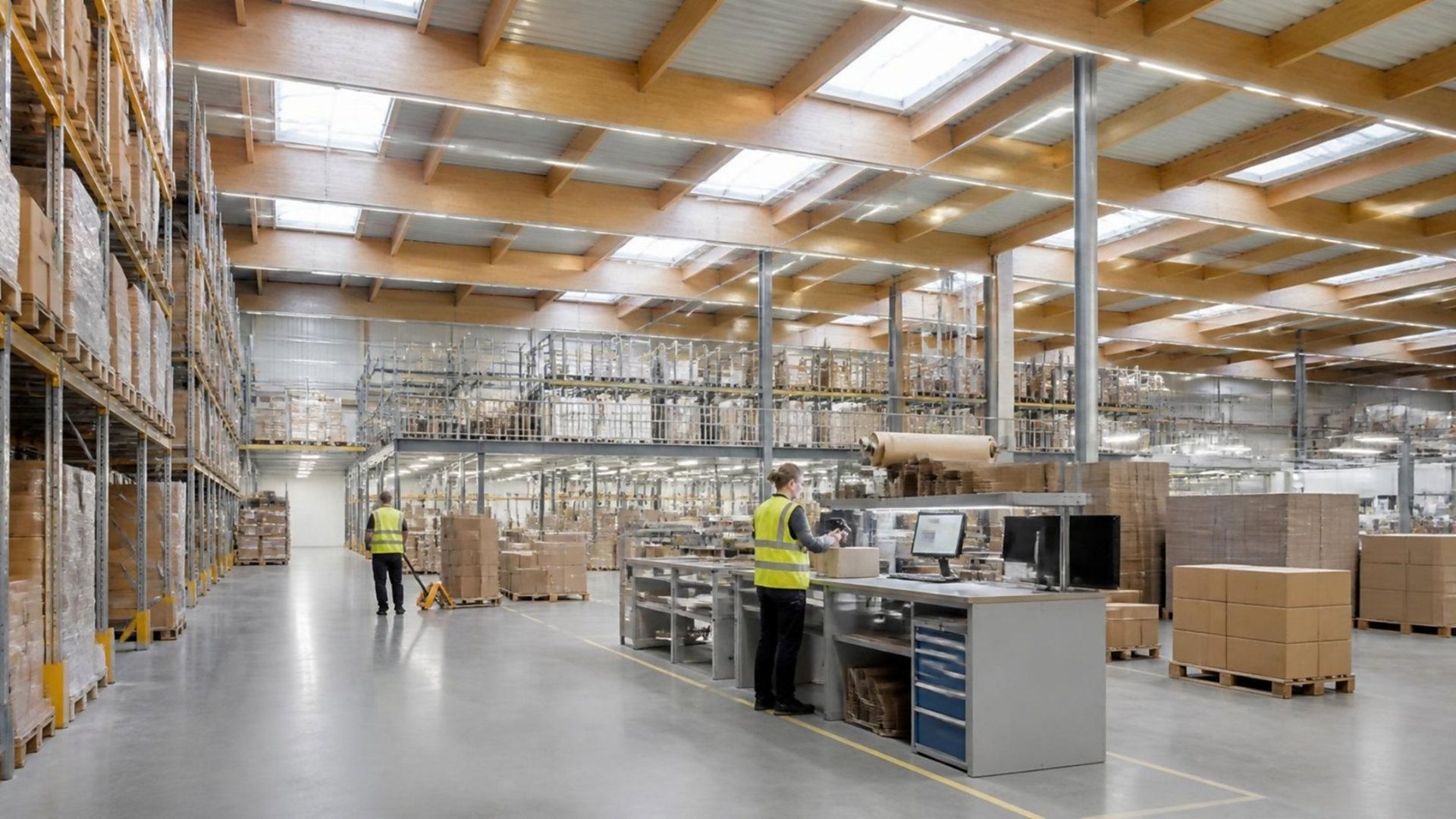
Three figures that describe this market
These figures illustrate just how strongly logistics service providers are shaping the real estate market in North Rhine-Westphalia—and where the tension between contracts and lease agreements arises.
-
70
Percent
Of the space leased in Cologne in the first half of 2026, the majority went to logistics service providers. Retail and e-commerce, as direct users, accounted for 17 percent.
-
5,000
square meter
At this scale, we're talking about logistics. Below that, it's warehousing in the strict sense of the term.
-
3–5
Years of the contract
Typical term of a contract—shorter than the five to ten years required by a lease for a new building.
What Makes a Warehouse Suitable for Third-Party Use
Six characteristics determine whether a warehouse can adapt to a change in the client—and thus whether it is suitable for contract logistics at all.
-
01 Standard Sizes Instead of Custom Sizes
Twelve meters of clear height, 7.5 metric tons per square meter of floor load capacity, 12 × 24-meter column grid. If you stick to market standards, you’ll find a new tenant. Non-standard dimensions secure a contract but come at a cost for the next one.
-
02 Divisibility into Independent Units
If the hall can be divided into sections, it is possible to compensate for a partial outage. The key factors are separate entrances, separate break rooms, and a meter configuration that allows for a clear separation in the first place.
-
03 Delivery with Reserve
At least one ramp door per 1,000 m², plus one ground-level, truck-accessible door per unit. Planning generously for loading areas keeps the facility open to users who generate high traffic volumes.
-
04 Fixtures That Can Be Removed
Cold storage rooms, partition walls, and shelving systems are generally provided by the tenant. An owner will only build a cold-storage logistics facility themselves if they want a specialized property. It is important that fixtures can be removed without leaving any residue.
-
05 Permit for Use with Some Flexibility
The operating permit is often tailored to each specific contract—and it determines exactly what activities are permitted in the facility. A broadly worded existing permit can save months of time on the next contract.
-
06 Position that holds more than one contract
Proximity to the highway, staff availability, and the ability to operate at night depend on the client. The more central and flexible the location, the larger the pool of contracts that can be served from there.
What type of contract are you looking to map?
Tell us which client you’re looking for, the contract term, and what’s supposed to happen in the warehouse. Mike Dimmel and the Industry & Logistics team will assess your needs and let you know which properties in Cologne, the Rhineland, and the Ruhr region are a good fit—and which ones you can rule out.

Mike Dimmel
Logistik & Industrie
Lease Agreement and Customer Contract: Must-Haves and No-Gos
The lease runs longer than the contract for which you’re renting. Three points that close this gap—and three that widen it.
-
Must-have: Initial term plus options
Link the initial term to the customer contract and use options to handle renewals. This way, you can make a new decision at the end of the contract, rather than having to make that decision at the time of rental.
-
Must-have: Room for third-party business
Subleasing and the addition of new clients must be explicitly included in the contract. Those who secure the freedom to conduct business with third parties can fill the remaining term of the contract rather than simply letting it run out.
-
Must-have: Decommissioning arranged in advance
Whoever installs cold storage rooms, partition walls, or shelving units should know by the time the project is completed which parts can remain in place and which must be dismantled. It’s cheaper to clarify this question up front than to deal with it later, when it becomes costly.
-
No-Go: Maturity Overhang with No Way Out
A lease term that extends beyond the contract period without any sublease, partial termination, or option in place. You will then be fully responsible for the remaining term.
-
No-Go: Approval That Doesn't Support the Assignment
The existing permit covers what the previous tenant did—not necessarily what your client is requesting. This review should take place before the contract is signed, not after.
-
No-Go: Special expansion without subsequent use
A renovation tailored precisely to a single client renders the space unusable for the next one. A custom-built new structure is only cost-effective over the long term, with a client who has strong creditworthiness and appropriate safeguards in place.
Seven Questions to Ask Before Renting
Issues that can be clarified in advance when it comes to contract logistics—and that otherwise only come to light once the lease is already in effect.
-
Are we renting for future use or for a specific contract?
Both situations occur. Those who lease for inventory purposes need a market-standard warehouse suitable for third-party use that can accommodate varying orders. Those who lease for a specific contract tailor the space to that contract’s requirements—and bear the risk if the contract ends. The answer to this question determines everything that follows.
-
What happens if the customer contract ends before the lease agreement?
The norm, not the exception: Contracts typically run for three to five years, while leases for new construction run for five to ten years. There are three ways to address the surplus: an initial term aligned with the contract, extension options instead of a long fixed term, and contractually guaranteed flexibility for third-party business. All three should be addressed during the initial negotiations, not during renegotiations.
-
Which regions in North Rhine-Westphalia are eligible?
Cologne and the Rhineland are the core market: highway interchanges, the Rhine corridor, and the ports provide the density that contract logistics requires. In the Ruhr region, industrial and commercial demand, as well as a deep labor market for shift work, add to this. The Lower Rhine region, with its corridor through Venlo to Duisburg, serves demand from overseas. Added to this are the Bergisches Land and the Aachen area, with connections to Antwerp and Maastricht. The client almost always determines which of these regions is suitable.
-
When is it worth building a custom home?
When a consumer goods company awards a contract to a major service provider for ten or fifteen years, building a new facility in accordance with the contract’s requirements can be a sound investment. The prerequisites are a long contract term, a client with strong creditworthiness, and collateral to support the arrangement. Otherwise, the best option is to use existing facilities.
-
Who installs refrigeration systems and special equipment?
Cold storage rooms and similar equipment are generally provided by the tenant and installed in the property. It is rare for an owner to construct a cold-chain logistics facility from the outset—the result is then a specialized property with a correspondingly small pool of potential subsequent users. Anyone planning such equipment should specify the installation, operation, and dismantling procedures in the lease agreement.
-
Does the license cover the new project?
The occupancy permit is often tailored to each specific contract, and it determines what is permitted in the warehouse. This becomes particularly relevant when there are requirements that deviate from standard practices—such as hazardous materials, food products, or nighttime deliveries. This review should be the first step in the search process.
-
Can the project be implemented within the existing network?
Not every contract requires a separate lease. Those who already own or lease space can often integrate a new contract into their existing network. This is usually the most cost-effective solution—and the one that’s most often overlooked when searching for a location.
Three Scenarios Where Costs Can Get High
From nearly twenty years of hall brokerage in North Rhine-Westphalia—and all three only become apparent once the lease is already in effect.
-
To use an area for a purpose other than its intended use
The most common mistake in this industry: renting a space that isn’t even approved for the intended use. What the previous tenant was allowed to do isn’t automatically what your client needs. The process of changing the permitted use then takes longer than the contract allows.
-
Underestimating the client's traffic volume
Contract logistics brings traffic—specifically, the client’s traffic, not the company’s own. If the volume is underestimated, the maneuvering area, number of gates, and truck parking spaces will be insufficient. It’s nearly impossible to make adjustments on a completed property.
-
Committing to a fixed term with no way back
Anyone who signs a lease that runs longer than the underlying contract must bear the excess term themselves. Without an option, sublease, or guaranteed flexibility for third-party business, the only recourse is their own balance sheet.
A Selection of Properties We Have Placed
Three warehouses located between Cologne, Kerpen, and Frechen—and what they reveal about contract logistics and changes in clients.
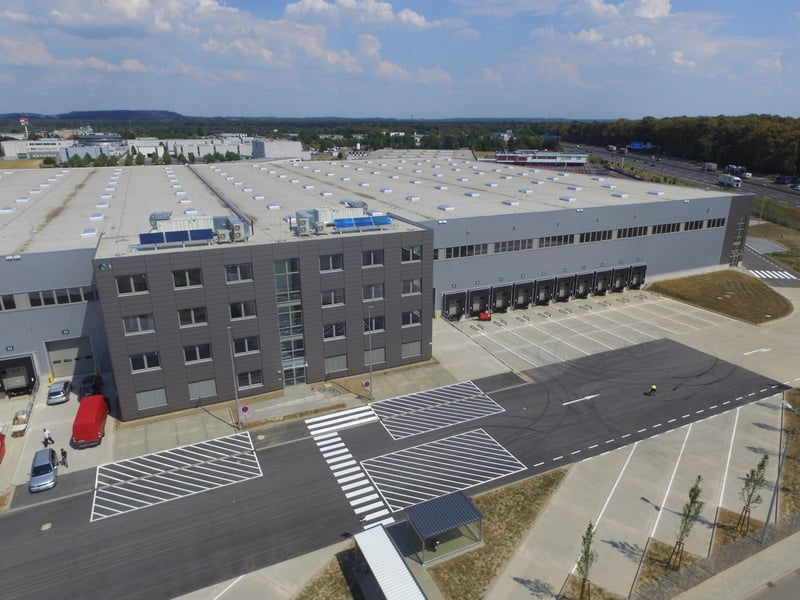
13,500 m² of logistics space in Computacenter Park 2–4, leased for a specific customer order. The contract has since expired, and the space is now being used for fulfillment-related services—exactly what “third-party usability” is intended for.
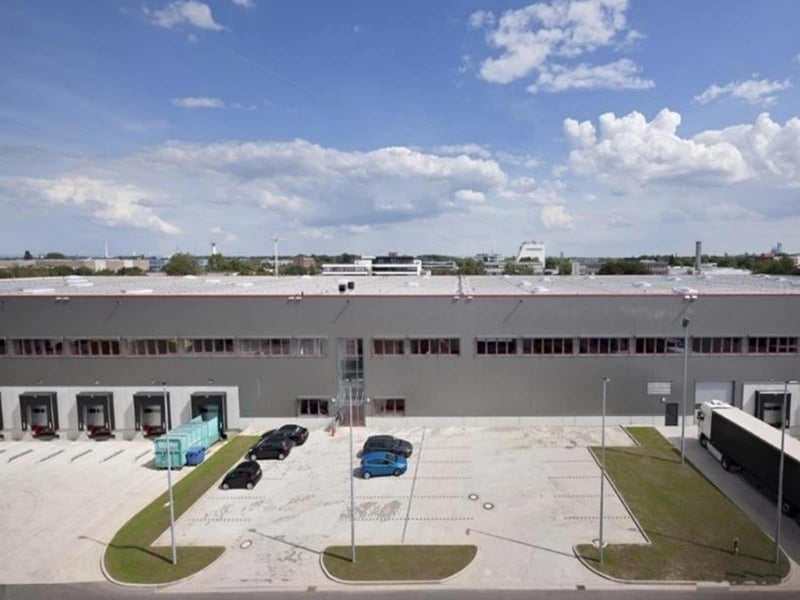
10,000 m² of logistics space at Wankelstraße 17–19. Contract logistics and third-party fulfillment under one roof: What matters here is that the space, loading doors, and technology can accommodate changes in clients and peak demand.
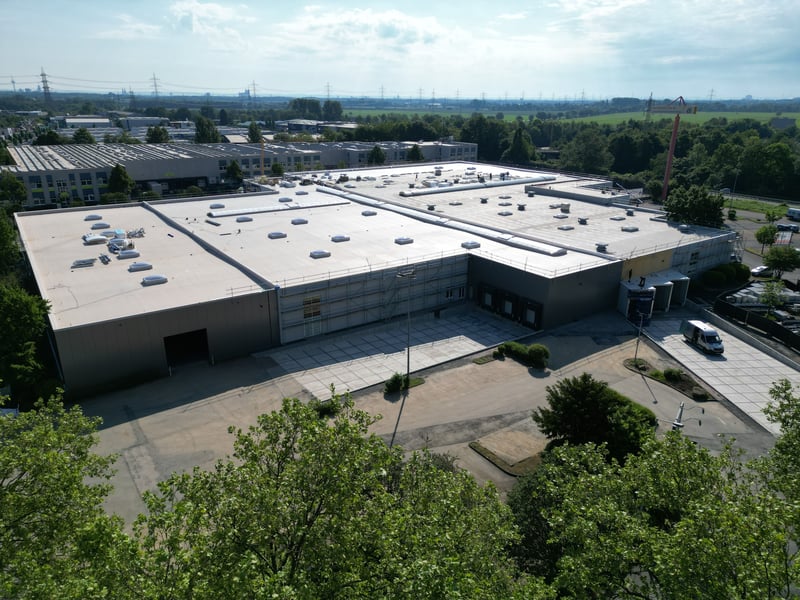
13,700 m² of warehouse space on Ernst-Heinrich-Geist-Straße, divided among several tenants. A location that demonstrates how divisible units can accommodate different user profiles side by side—the structural prerequisite for third-party use.
Why We Know About Properties That Aren't Listed on Any Portal
In contract logistics, the time window is often the deciding factor. Access to properties before they hit the market can mean the difference between winning a contract and being turned down.
Thanks to our ongoing contact with property owners in Cologne, the Rhineland, and the Ruhr region, we know early on when a lease is ending or will not be renewed. Such properties never appear on a listing site—they’re already leased before they’re made public.
In the Cologne area, we secured spaces for users in facilities that a previous tenant had already repurposed—the intended use and operating permit matched the new requirements exactly. This specific fit could not be found at all on the usual real estate portals.
Six colleagues in North Rhine-Westphalia have been working exclusively in logistics and industry for nearly twenty years as in-house staff. Through the Angermann Real Estate Group, specialists in Hamburg, Berlin, Hanover, and Frankfurt are joining the team.
Member of the DEBV
Brownfield Expertise for North Rhine-Westphalia
We bring industrial brownfields and existing sites back into use: with in-depth research, clear positioning, and the right users and investors. As a member of the German Brownfield Association, we are part of the nationwide network for site revitalization.
Case Study: Kerpen-Sindorf—Brownfield Site Brokered to Aconlog →Won the contract, but still need space?
Then time is of the essence. Patrick Sohns is familiar with project developments and expiring leases in Cologne, the Lower Rhine region, and the Ruhr area, and will tell you frankly what can be achieved within your timeframe—and what the fastest way to get there is.

Patrick Sohns
Geschäftsleitung, Logistik & Industrie